Voice AI Fitness Training through Habit Building
INDUSTRY
Associate Design Director
ROLE
Associate Design Director
TIMELINE
Aug 2025 - Jan 2026
TEAM
1 UX Researcher
3 UX Designers
Personal training increases adherence to fitness goals up to 80%, but it’s always been a luxury at an average of $100/hr.
The rise of LLMs created a rare inflection point for the fitness industry. My client saw an opportunity to move beyond static programs and democratize access to personalized coaching at scale.
I joined the client design team as the design lead, defining the design strategy & delivery for the cross-cutting habit agent and multiple core features. Together, we brought the MVP of a voice-AI fitness training app from 0→1 to market in six months.
IMPACT
Achieve 5000+ active users in grand opening, with a realization of. Voice AI fitness training patent. Lorem ipsum dolor sit amet, consectetur adipiscing elit, sed do eiusmod tempor incididunt ut labore et dolore magna aliqua. Ut enim ad minim veniam, quis nostrud exercitation ullamco laboris nisi ut aliquip ex ea commodo consequat.
+50%
Placeholder for text
Placeholder for text
+50%
Placeholder for text
Placeholder for text
+50%
Placeholder for text
Placeholder for text
CONTEXT
Since 2000, my client has been a leader in personalized fitness through a content and software-led subscription platform. As it transitions to an AI-led fitness ecosystem in 2023, the company aims to enhance user experience with advanced personalization and real-time feedback. In response to this shift, they are launching an AI training app to further empower users on their fitness journeys.
#1
US market share
8M+
members in 120 countries
141M+
workouts completed every year

PROCESS
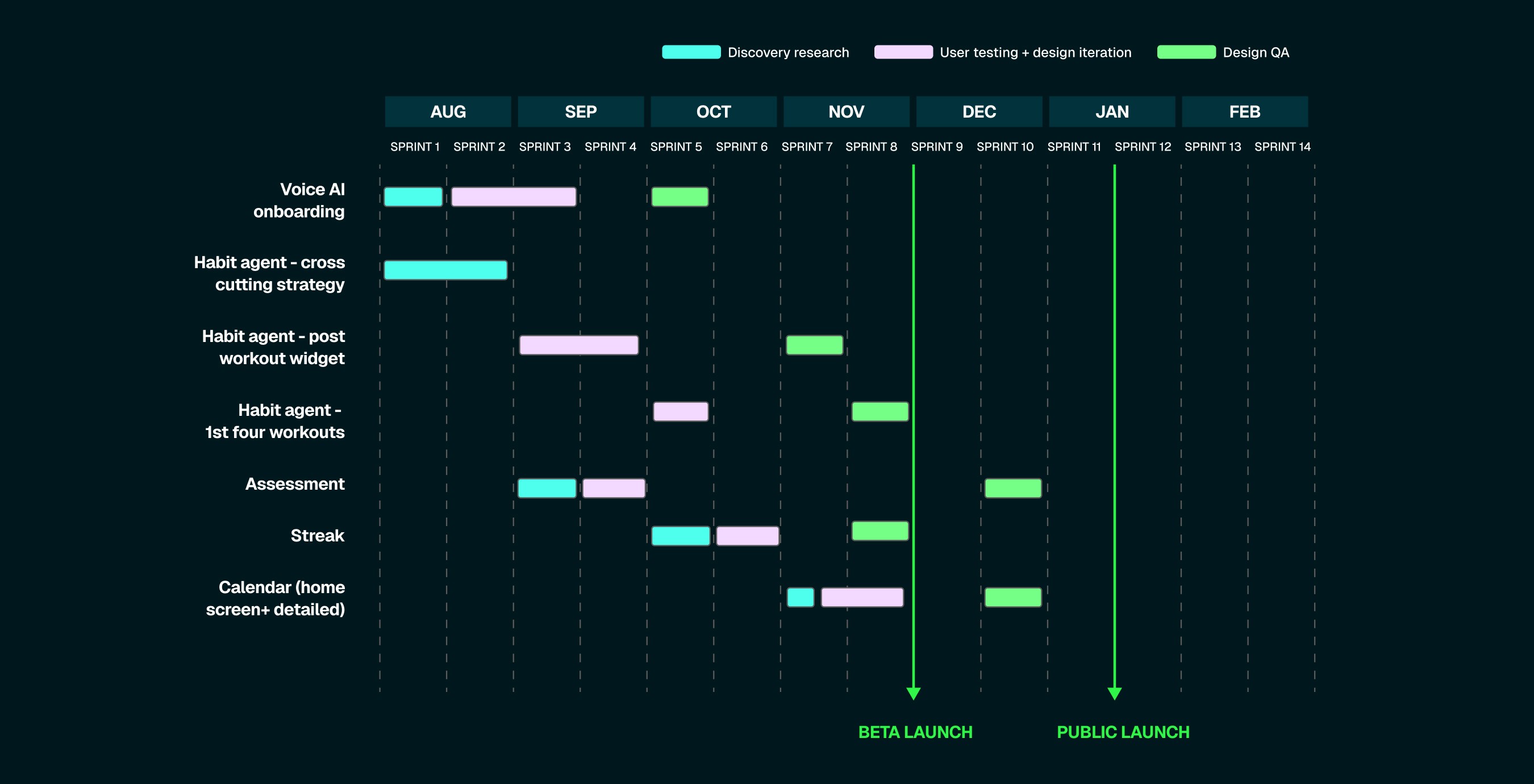
My process was divided into two key phases: first, research and design strategy — identifying user needs and informing product feature roadmapping — once the feature was locked, I iterated on design, conducted user testing, and collaborated with developers to assess feasibility within a tight timeline, ensuring a timely and effective design delivery.
HABIT AGENT
How might we encourage users to form sustainable fitness habits scientifically in the digital world?
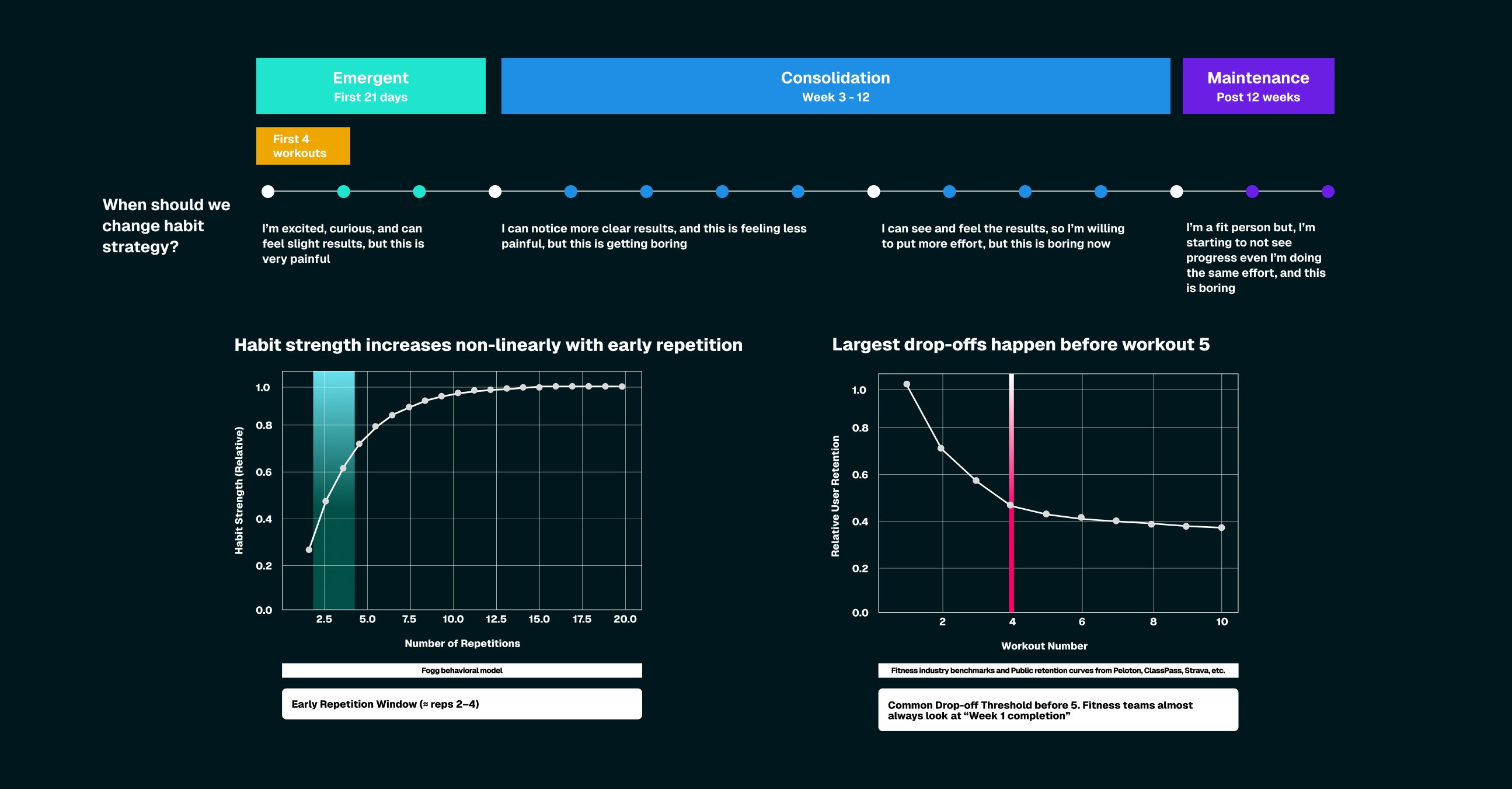
Leading with insights: To understand users' habit formation, I undertook three key actions. First, I researched articles on the psychology of fitness habit formation. Second, I analyzed existing data from the client regarding user drop-off points. Lastly, I conducted 12 exploratory interviews with users to gather qualitative insights into their motivations and challenges.
Through this process, I discovered that
1. The Habit Formation Cycle: Habit formation follows a specific cycle, with 21 days identified as a critical pivot point for success. Notably, there is a significant drop-off after the first four workouts.
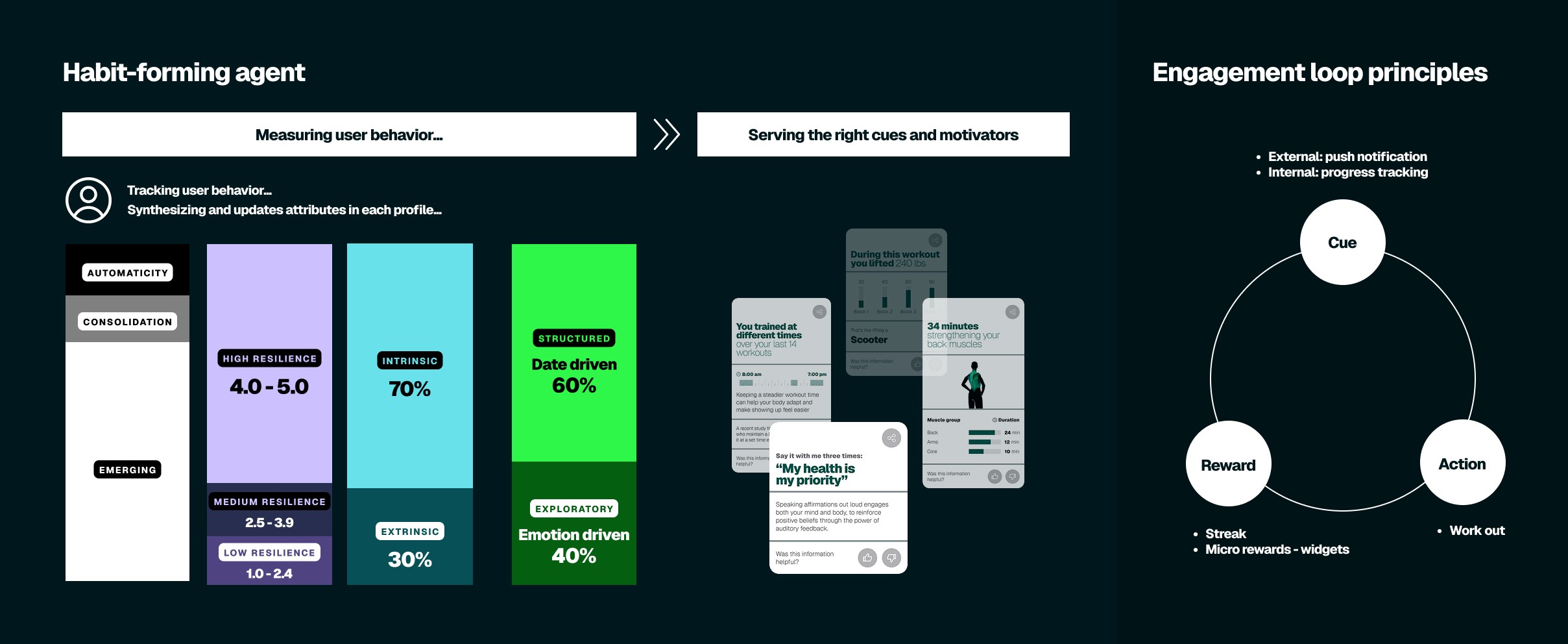
2. Personalized Motivations: Each user I interviewed displayed unique motivations and responses to encouragement, underscoring the necessity of true personalization to foster sustainable fitness habits.
True personalization through engagement loop: to translate these insights into actionable features, my design strategy focused on measuring user behavior and delivering tailored cues and motivators. This strategy was applied across multiple features, including the post-workout widget, in-workout prompts, and notifications.
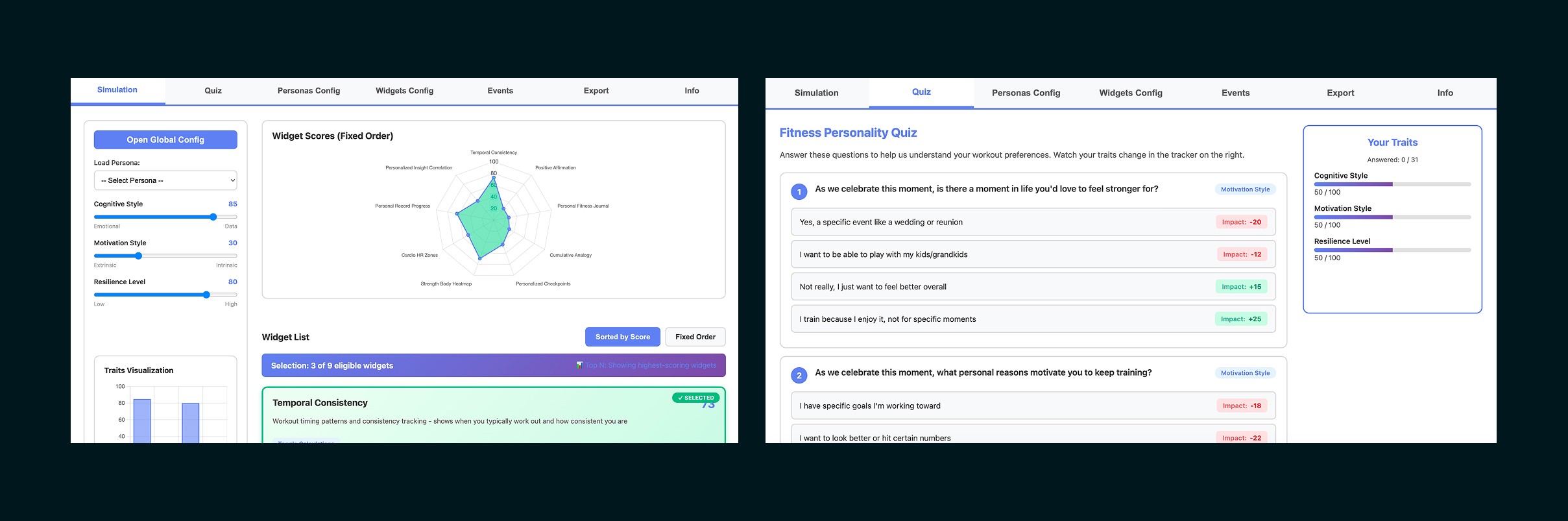
Build scalable engine with engineer through vibe coding: A design strategy is only as good as its implementation. I leveraged vibe coding to actualize my vision, enabling each user to have a personalized profile based on attributes such as extrinsic vs. intrinsic motivation and data-driven vs. emotion-driven tendencies. The simulator applies the appropriate frequency and type of widgets based on these user attributes. This approach significantly reduced communication barriers, allowing engineers to grasp the concept quickly; they were able to implement it within a single day, as demonstrated in the image below the stimulator.
HABIT AGENT - POST WORKOUT WIDGET
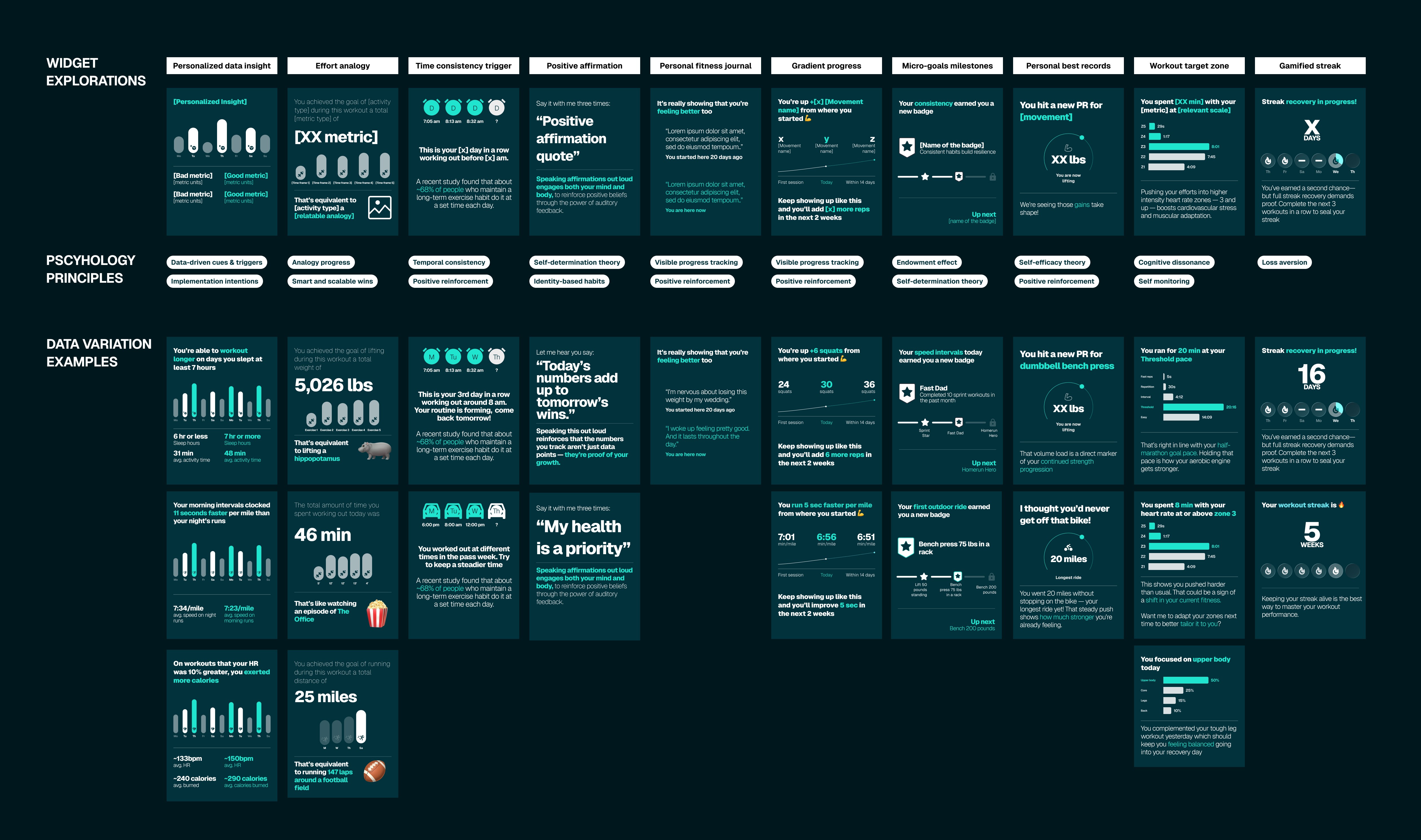
Psychology principle repository: for the first release, I developed widget concepts anchoring around first attribute cognitive style (emotion vs. data driven). Additionally, I established a psychology principle repository to provide scientific backing for each widget's design. For instance, the Time Consistency Widget is grounded in the concept of Temporal Consistency, which suggests that individuals who exercise at consistent times are more likely to establish lasting habits. Meanwhile, the Effort Analogy Widget leverages the Analogy Progress principle, which posits that users find it easier to grasp concepts when data is presented through analogies rather than raw numbers.
In the second phase, I further enhanced the framework by incorporating motivation styles, differentiating between extrinsic and intrinsic motivators to better support habit formation.
User research: Collaborating with a user researcher, we tested various widget designs. The results indicated that highly personalized widgets performed best, allowing us to rank their effectiveness.
HABIT AGENT - POST WORKOUT WIDGET
Full randomization vs. prescriptive: In an ideal scenario, a randomization model would dynamically select the most suitable widget for each user. However, due to constraints in this initial release—such as a shortened onboarding script that limits our understanding of user profiles and restricted developmental capacity—I worked with dev to implement a prescriptive approach. To enhance the personalization model, I ensured the inclusion of a feedback mechanism that gathers user input through interactive questions after each workout. This allows us to progressively refine and expand user attributes, enhancing the overall customization experience.
ONBOARDING - DESIGN ITERATIONS
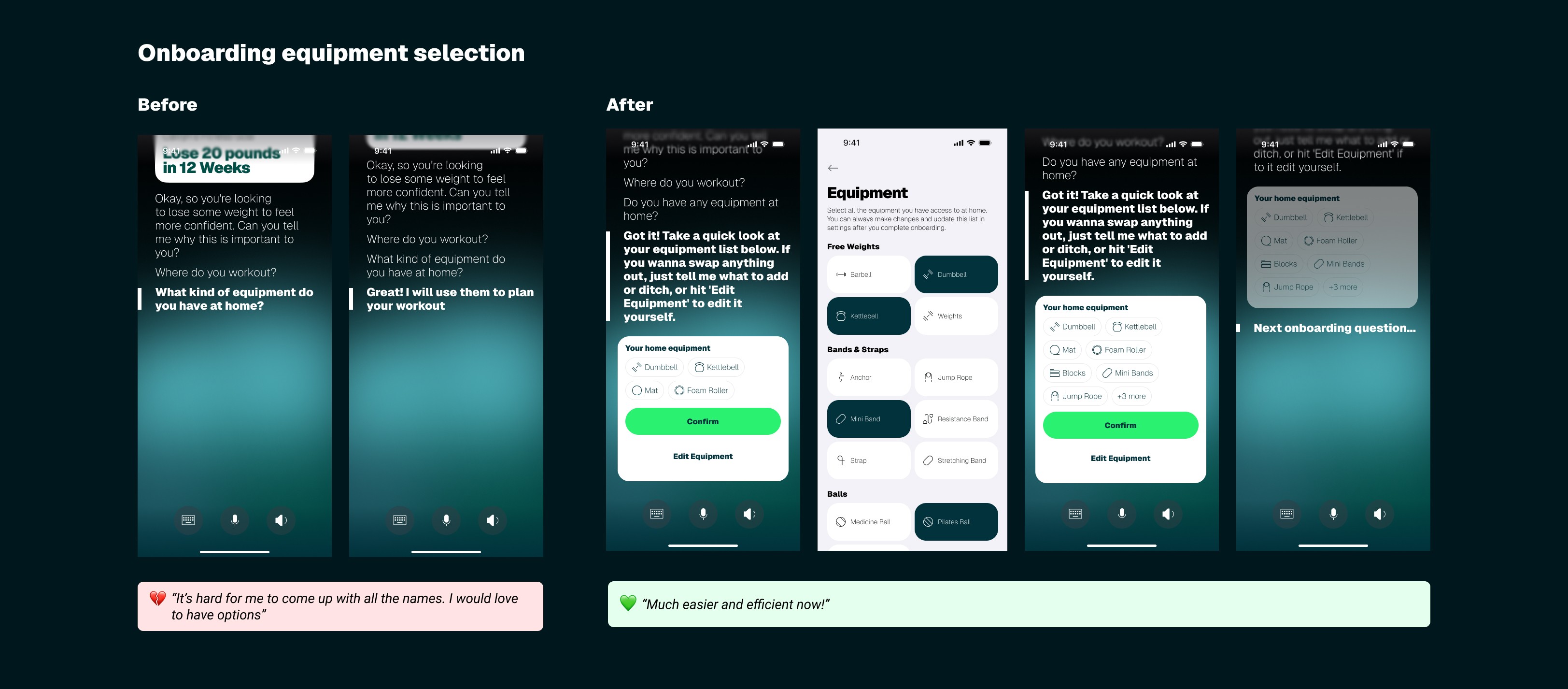
Balancing a voice-first vision with real-world user behavior: Onboarding was intentionally designed as a voice-driven experience. The product vision—and a clear directive from leadership—was to lean fully into conversational AI, allowing users to speak naturally while the coach gathered inputs to generate a personalized training plan. However, beta testing surfaced a critical issue:
Cognitive recall under pressure: Users struggled to remember precise equipment names on the spot, often providing incomplete or vague answers.
Rather than retreating from voice, I reframed the problem as one of trust and error recovery. I iterated to a hybrid approach—keeping voice as the primary input, while introducing a lightweight UI to confirm key information and allow quick edits. This significantly improved response accuracy and user confidence in subsequent tests, while preserving the conversational flow.
ONBOARDING - DESIGN ITERATIONS
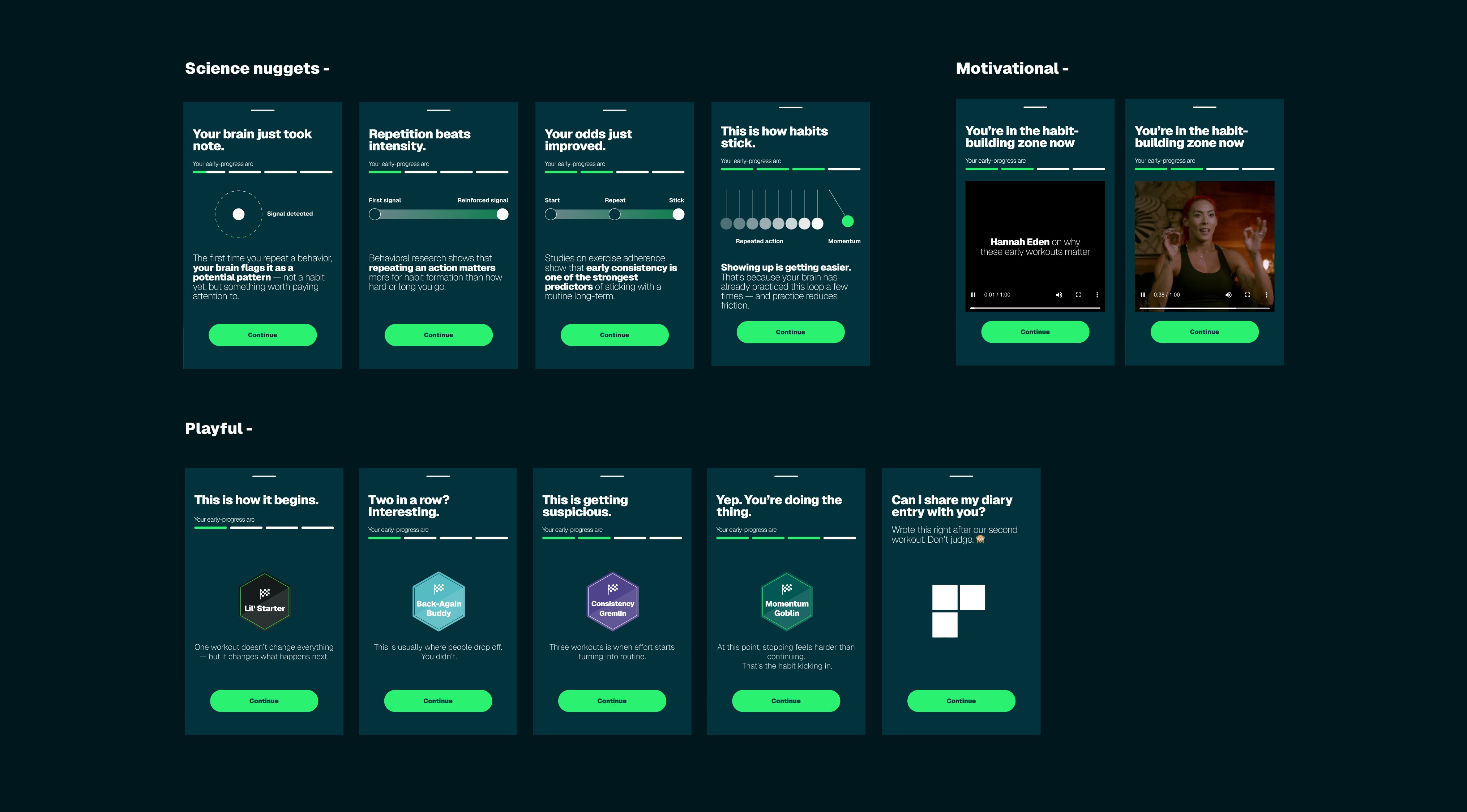
HABIT AGENT - FIRST FOUR WORKOUTS
Concept testing & format alignment: I developed widget concepts anchoring around first attribute cognitive style (emotion vs. data driven). as well as build psychology repository for it time consistency (people who worked at a consistent time are more likely to form a habit), effort analogy (it is easier for user to perceived data in analogy than in pure number).
OTHER KEY FEATURES I LED
Assessment: I developed widget concepts anchoring around first attribute cognitive style (emotion vs. data driven). as well as build psychology repository for it time consistency (people who worked at a consistent time are more likely to form a habit), effort analogy (it is easier for user to perceived data in analogy than in pure number).
Calendar and streak experiences:
CO-OWNER OF DESIGN SYSTEM
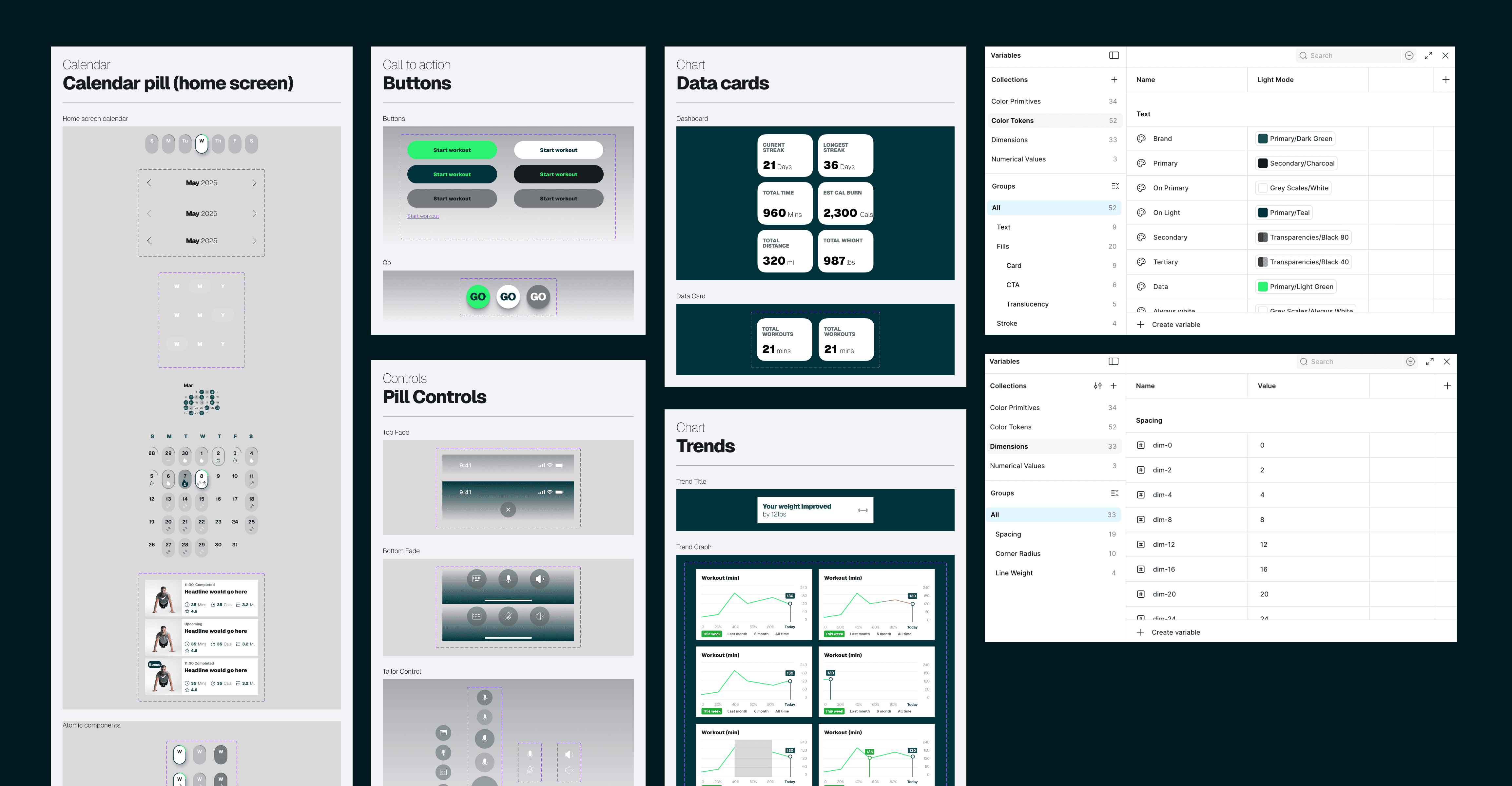
I also co-owned the app-wide design system, establishing core foundations—including primitive and semantic color tokens, dimension tokens—and building scalable atomic- and pattern-level components to support long-term product velocity.
To continue…